30–90 Day Roadmap: Best Options Trading Books with ODD and Templates

The best way to learn options trading is not a single book, but a staged reading roadmap: foundational texts first, then strategy and volatility, then the greeks and advanced risk control, all paired with disciplined practice. Read the Options Disclosure Document early since it explains the mechanics and risks every strategy book assumes you already know. Pair each chapter with paper trading and a simple trade journal before any real capital moves.
TL;DR:
- A staged reading approach ensures each book matches your current skill level, from beginner to advanced concepts like greeks and volatility.
- Focus on books that include practical examples, payoff diagrams, and exercises, and verify they cover essential topics such as margin rules and risk management.
- Prioritize understanding core strategies and risk mechanics through the Options Disclosure Document and free resources from the Options Industry Council before trading live.
- Implement a 30 to 90-day practice plan with structured paper trading, gradually moving from basic to complex options strategies while tracking and reviewing results.
- Use templates and checklists to convert book knowledge into actionable trade plans, and emphasize disciplined risk management over chasing new or advanced strategies.
Table of Contents
- A reading roadmap from beginner to advanced
- How to evaluate a book before you buy it
- The greeks, volatility, and spreads every book should cover
- Turning book knowledge into a 30 to 90 day practice plan
- Why a practical, template-driven approach works
- The part of options education most readers skip
- Put the reading roadmap into action with structured templates
- Authoritative resources to read alongside your books
- Sources
- FAQ
A reading roadmap from beginner to advanced
Jumping into a dense options text before you understand contract mechanics wastes time and creates bad habits that are hard to unlearn. A staged approach matches the book to the skill you actually have, so each new concept lands on solid ground instead of guesswork.
- Beginner stage: start with books that explain calls, puts, strike prices, expiration, and the handful of core strategies like covered calls and protective puts. Look for texts with strategy tables, payoff diagrams, and worked examples rather than dense theory, since beginner-focused guides such as Options Trading For Dummies are built around step-by-step walkthroughs.
- Intermediate stage: move into texts centered on implied volatility, pricing intuition, and multi-leg spreads like verticals, iron condors, and calendars. This is where you start managing open positions instead of just opening them, including adjustments and early assignment scenarios.
- Advanced stage: finish with books that go deep on the greeks, the volatility surface, and quantitative position sizing. Trading Options Greeks is a practitioner-oriented example aimed at readers who already understand basic strategy mechanics and want to manage risk with more precision.
Reading speed matters less than retention. A reasonable cadence is one strategy or concept per week, read the chapter, paper trade it a handful of times, then move forward. Skipping ahead because a book is “easy” usually means skipping the risk lessons buried in the examples.
Pro Tip: Keep a running list of strategies you have paper traded at least five times before you consider them part of your real toolkit.
How to evaluate a book before you buy it
Not every options book deserves a spot on your shelf, and the wrong one at the wrong stage can slow you down more than no book at all. A short checklist before purchase saves money and reading time.
- Topic coverage: does it address the greeks, implied volatility, spread construction, assignment and margin mechanics, and at least a mention of tax treatment?
- Author background: prefer authors with exchange, trading desk, or instructor experience over generic finance writers with no stated trading background.
- Pedagogy: look for worked examples, end-of-chapter exercises, strategy tables, and ideally spreadsheets or code you can run yourself.
- Edition recency: options margin rules, product listings, and exchange mechanics change, so a book updated for current market structure is worth more than an older edition sitting unrevised.
- Practical extras: templates, sample trade plans, and suggested practice drills signal a book meant to be used, not just read.
One resource worth checking alongside any book purchase is the Options Industry Council’s investor education materials, which offers free, structured courses and webinars that cover many of the same fundamentals a good beginner book teaches. Cross-referencing a paid book against this free baseline is a fast way to judge whether the book is actually teaching anything beyond what is freely available.
The greeks, volatility, and spreads every book should cover
A book that skips the mechanics behind price movement will leave you guessing under real market conditions. These are the concepts worth testing a book’s coverage against before you buy it.
- Delta, gamma, theta, vega, rho: these measure an option’s sensitivity to the underlying price, the rate of change in that sensitivity, time decay, volatility changes, and interest rates, respectively, and they drive decisions about strike selection and position sizing.
- Implied versus realized volatility: implied volatility reflects what the market expects, while realized volatility is what actually happened, and the gap between them (along with volatility skew across strikes) shapes which strategies make sense.
- Strategy families: income strategies (covered calls, cash-secured puts), directional strategies (long calls, long puts), and volatility strategies (straddles, iron condors) each deserve their own diagrams and worked examples in a solid book.
- Risk management: position sizing, assignment risk, and margin requirements belong at the center of any serious text, which is exactly what the Options Disclosure Document covers before you ever open a position.
Turning book knowledge into a 30 to 90 day practice plan
Reading builds vocabulary, but skill comes from repetition under conditions that mimic real trading. A short practice plan tied to your reading stage keeps progress measurable instead of vague.
- Days 1 to 30: finish your beginner reading, then paper trade covered calls and cash-secured puts using a structured paper trading plan until the mechanics feel automatic.
- Days 31 to 60: move into verticals and other defined-risk spreads from your intermediate reading, sizing each paper trade at a fixed percentage of your demo account rather than varying it by conviction.
- Days 61 to 90: test volatility-based trades like iron condors, scaling into small real positions only after your paper trading shows consistent, repeatable results over multiple weeks.
Record entry and exit logic, position size, and outcome for every trade, then review weekly for patterns in your expectancy and average risk per trade. Before committing real capital at any stage, reread the relevant sections of your broker’s margin documents and the ODD, since assignment and margin rules vary by position type.
Pro Tip: Treat a string of losing paper trades the same as a string of losing real trades, since skipping that discipline early is the most common reason traders blow up live accounts later.
Why a practical, template-driven approach works
Books teach concepts, but most traders stall when it is time to apply them without a clear next step. That gap between knowledge and action is where templates, checklists, and structured practice plans do the real work of converting reading into a usable skill.

Profitomics builds its materials around that gap, offering practical eBooks with actionable frameworks, templates, and checklists designed for readers who want to move from learning to doing quickly. Resources like a risk management framework and a stop-loss testing guide are built to sit alongside the reading roadmap above, giving you something concrete to apply after each stage rather than leaving the translation from theory to practice up to guesswork.
None of this replaces the free, authoritative baseline from the Options Industry Council or the Options Disclosure Document, both of which remain the starting point for understanding how options actually work and what can go wrong. Practical templates are most useful once you already understand the mechanics those resources teach.
The part of options education most readers skip

Most advice on learning options trading overindexes on strategy selection and underindexes on the boring parts: reading the ODD, sizing positions conservatively, and journaling trades with enough detail to spot patterns. Readers hunt for the “right” book as if one exists that will unlock consistent profits, when the honest answer is that several good books cover similar ground, and the real differentiator is what you do after you close the book.
Modern strategies like 0DTE trading have made advanced concepts more accessible to retail traders, but practitioners caution that these short-dated trades carry higher gamma risk and demand stricter position sizing and documented rules rather than improvisation, as Cboe’s practitioner analysis on zero-day strategies makes clear. The reader who prioritizes disciplined paper trading and risk rules over chasing the newest strategy will outperform the one who reads more books but practices less.
— Kai
Put the reading roadmap into action with structured templates
Books give you the framework, but a template turns that framework into a worksheet you can fill out the same day you finish a chapter. For readers working through the foundational and intermediate stages above, Stock Market Mastery pairs trading templates and checklists with the kind of step-by-step structure a beginner or intermediate reading list tends to lack on its own.
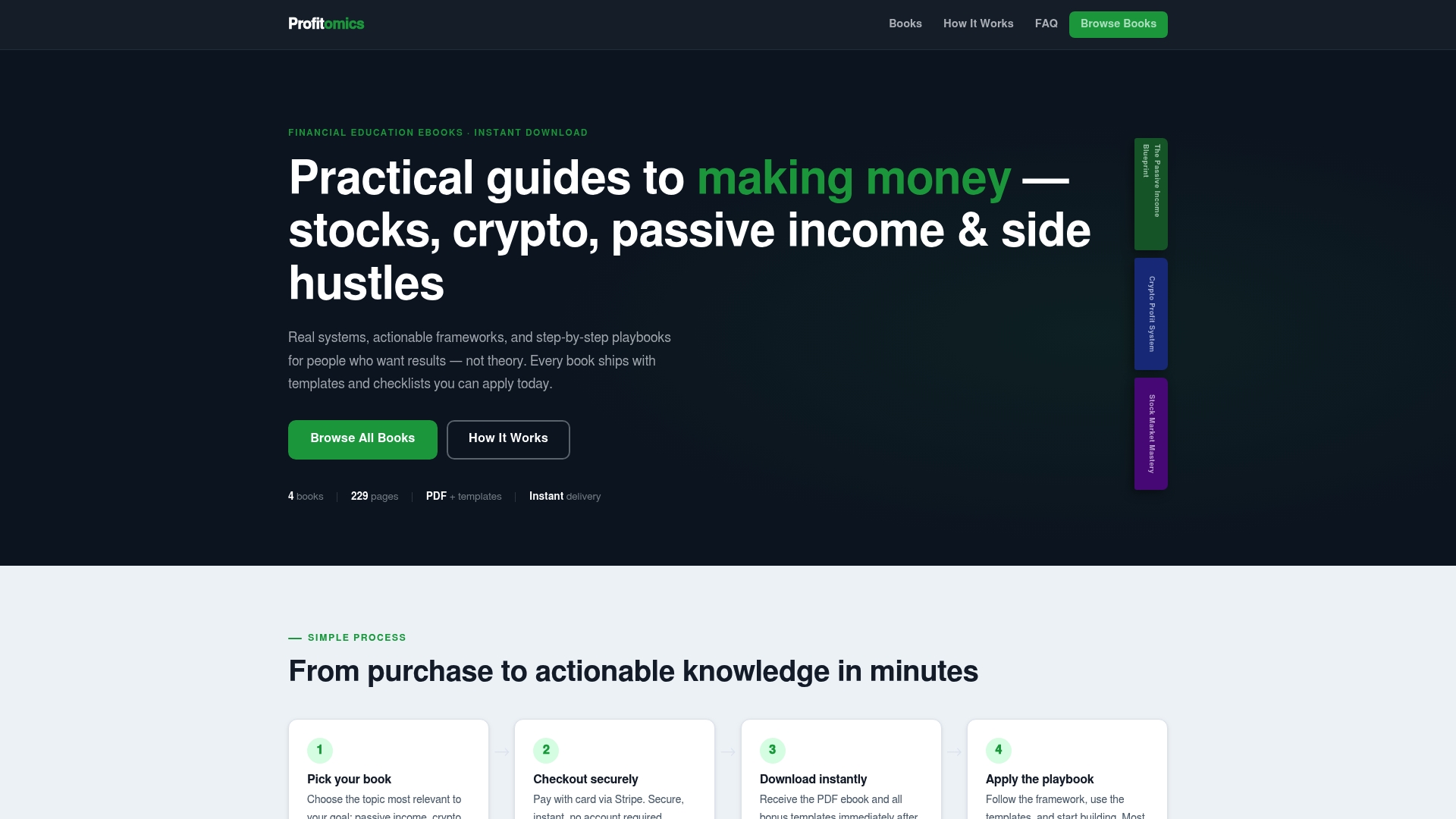 The ebook is built to run alongside your 30 to 90 day practice plan: use the reading roadmap for concepts, the ODD for risk mechanics, and the templates for the trade-plan structure and checklists that keep practice consistent. Buyers get instant digital delivery, so there is no wait between deciding to apply a lesson and having the worksheet in hand. Browse the full catalog of guides at Profitomics to find the one that matches your stage.
Authoritative resources to read alongside your books
No book substitutes for the regulatory and educational materials published by the exchanges and industry bodies that actually set the rules.
- The Options Disclosure Document explains option mechanics and principal risks, and every new options trader should read it before placing a live trade.
- The Options Industry Council offers free, self-paced courses and webinars that complement whatever book you are reading.
- Cboe’s practitioner insight on 0DTE strategies gives useful context for advanced readers exploring modern, short-dated strategies.
This article is general information, not a substitute for advice from a qualified financial advisor. Consult a qualified financial professional about your own circumstances before acting on anything here.
Sources
- Characteristics and Risks of Standardized Options (ODD)
- OCC / Options Industry Council investor education overview
- Henry Schwartz’s zero-day SPX iron condor strategy: a deep dive (Cboe)
FAQ
What is the best book for starting with option trading?
The best starting point is a beginner-focused text with strategy tables and worked examples covering calls, puts, and basic strategies like covered calls, such as Options Trading For Dummies. Pair it with the Options Disclosure Document so you understand the risks behind the mechanics from day one.
What is the 3-5-7 rule in options trading?
Definitions of this informal rule vary across trading communities and it is not defined in regulatory or exchange materials, so no single authoritative version exists. Readers encountering it should verify the specific risk percentages against their own broker’s margin rules rather than treating it as a fixed standard.
What does Warren Buffett say about options trading?
This article does not cover specific commentary attributed to Warren Buffett on options trading, since no sourced material supports a direct quote or position. Readers interested in his views should consult his own shareholder letters or interviews directly.
Is $1,000 enough to trade options?
A small account can work for strategies with limited risk, like buying single options or cash-secured puts on lower-priced underlyings, but position sizing and the ODD’s risk disclosures matter more than the dollar amount itself. Most educators recommend starting with paper trading regardless of account size before committing real capital.