Best Risk Management Courses for Investors and New Traders

For a beginner investor or new trader, the best risk management course is the one that gets you to write rules and use them on real decisions. Our pick is Stock Market Mastery, a $47 one-time ebook with spreadsheets, templates and checklists you can use the day you download it. Below it sit the video courses people most often compare it with, what each costs, and how to choose between them.
This guide is for people managing their own money: aspiring investors, new traders, side hustlers and anyone building income streams. It is not a guide to corporate or enterprise risk careers, which are a different path (more on that below).
TL;DR
- Risk management for an individual investor means deciding in advance how much you can lose, how large each position is, and when you will exit. A course is only worth it if it makes you write those rules down.
- Stock Market Mastery from Profitomics is our first choice: $47 one-off, instant PDF delivery, with spreadsheets, templates and checklists built for immediate use.
- Video courses such as Udemy’s Stock Market from Scratch ($99.99 normal price) and Yale’s Financial Markets on Coursera cover broader ground, with risk as one topic among many.
- Professional risk credentials exist, but they serve people building a risk career, not people protecting their own portfolio.
- Pick by goal, time and budget, then judge the result by whether your next trade follows a written plan.
Table of Contents
- What a risk management course should teach an individual investor
- The options compared
- Professional risk credentials are a different path
- How to choose based on your goal
- A worked example of risk-first thinking
- Our perspective
- Start with Stock Market Mastery
- FAQ
- Sources
What a risk management course should teach an individual investor
“Risk management” means two different things online. In a corporate setting it is a profession: identifying hazards, scoring them and reporting to a board. For a person with a brokerage account it is much simpler and much more personal: protecting your capital from your own mistakes.
A useful course for that second reader should leave you with these things on paper:
- A maximum loss per trade or per position, set as a share of your account before you enter.
- A position size that follows from that maximum, not from how confident you feel.
- An exit rule for when you are wrong and another for when you are right.
- A limit on total exposure, so several positions cannot all fail for the same reason.
- A review habit, so each decision gets recorded and checked afterward.
The last item matters most for new traders who struggle with emotion. Fear after a loss and excitement after a win both push people to break their own rules. A course that only explains concepts leaves that problem untouched. One that hands you a checklist and a log does something about it.
When you compare options, ask of each: does it give me tools to fill in, or only information to absorb?
The options compared
Here are the main routes beginners take, side by side. Prices and details come from Investopedia’s November 2026 course roundups and its stock trading class review unless noted. Prices change, so confirm the current figure at checkout.
| Option | Format | Price | Best for |
|---|---|---|---|
| Profitomics Stock Market Mastery | PDF ebook with spreadsheets, templates, checklists | $47 one-time | Beginners who want a plan to use right away |
| Udemy: Stock Market from Scratch for Complete Beginners | Self-paced video | $99.99 normal price | Learners who prefer watching to reading |
| Yale Financial Markets (Coursera) | Self-paced video, readings, quizzes | Included in Coursera Plus: $59/month or $399/year | Learners who want a university-level overview |
| Morningstar Investor Classroom | Short lessons with multiple-choice quizzes | Free | General market knowledge, no credential |
1. Stock Market Mastery by Profitomics
This is the option we recommend first, and the reasoning is about what you do after you finish. Stock Market Mastery covers swing trading and long-term compounding strategies, and it ships as a PDF with companion bonus materials: spreadsheets, templates and checklists. You pay $47 once. Delivery is instant, so you can start the same day.
That structure suits the way risk management actually gets learned. A position-size calculation is something you do in a spreadsheet, not something you absorb from a lecture. A pre-trade checklist is something you run before you click buy. Our guides strip out unnecessary theory so that each chapter leads to something you can apply.
It fits beginners and people frustrated by approaches that never turn into action. It is not aimed at advanced investors who want professional advice.
2. Udemy: Stock Market from Scratch for Complete Beginners
Investopedia names this its top beginner pick among online stock trading classes. It runs about 6.5 hours of video with more than 50 downloadable resources, and it covers basic financial instruments plus fundamental and technical analysis. It includes a brief risk section, and its normal price is $99.99.
It is a fair choice if you learn best by watching someone walk through charts. Since risk is a short part of a broad course, plan to build your own written rules from it. If you want those rules scaffolded for you, the templates in Stock Market Mastery do that at a lower price.
3. Yale Financial Markets on Coursera
Taught by Nobel laureate Robert Shiller, this course has seven modules and 130 video lessons, with readings, quizzes and discussion boards. It is self-paced and beginner-friendly, and over 2 million students have taken it, according to Investopedia’s roundup. Access comes through Coursera Plus at $59 a month or $399 a year after a free seven-day trial.
It gives you a strong picture of how markets and financial institutions work, which is useful background. The time commitment is large, though, and the course is a survey of finance, not a trading-risk toolkit. Many readers pair a survey like this with a practical system so the knowledge turns into rules.
4. Morningstar Investor Classroom
Investopedia rates it best for beginners wanting general market knowledge. Lessons last about 10 minutes each with multiple-choice quizzes. There is no live instruction and no certificate. It suits a quick orientation to investing vocabulary. It does not walk you through building a personal risk plan.
Professional risk credentials are a different path
Search results for this keyword are full of designations for risk professionals, such as enterprise risk certificates and financial risk credentials. They are built for people who work in risk departments, insurers and project teams, and they take months of study and a proctored exam.
If your goal is a workplace credential, a dedicated provider of risk management certification courses is the place to compare those programs. If your goal is to stop losing money on your own trades or to invest with a plan, a credential adds cost and time without giving you the position-sizing sheet and exit rules you actually need.
How to choose based on your goal
Decide on one question first: do I want knowledge or a working system?
You are new and want to place your first trades safely. Choose a resource that ends in a plan. Stock Market Mastery is built for this, and our stock trading guide and investing for beginners walkthrough cover the first steps in more detail.
You trade options or crypto. The risks differ by market, so match the material to it. Our guides on options trading courses that teach risk and crypto courses that put risk first go through what to look for, and the Crypto Profit System is $37 one-off.
You want passive income, not active trading. Spreading risk across several income sources is its own skill. The Passive Income Blueprint is $27 one-off and is built around creating multiple income streams.
Your budget is tight. Compare total cost, not just sticker price. A subscription that runs $59 a month adds up if you take months to finish, while a one-time purchase stays fixed.
You have little time. Measure hours. A 6.5-hour video course and a 130-lesson university course are very different commitments, and the one you finish beats the one you abandon.

A simple test for any course
Before you buy, write down what you want to have on day 30: a written loss limit, a position-size formula, an exit rule, a trade log. After the course, check each item. If a course cannot get you to all four, it is teaching you about risk rather than helping you manage it. Our post on stock trading courses that force practice explains a 30 to 90 day way to run this check.
A worked example of risk-first thinking
Say your account holds $5,000 and you decide that no single trade may lose more than 1% of it, which is $50. You plan to buy a stock at $20 and decide you are wrong if it falls to $19. That is a $1 risk per share, so your maximum position is 50 shares ($1,000). If you had bought 200 shares on a hunch, a $1 drop would cost $200, four times your limit.

The arithmetic is simple. The hard part is doing it every time, including when you feel certain. That is why a spreadsheet and a checklist beat a lecture: they run the numbers before emotion has a say. The 1% figure here is an illustration, not a recommendation. Your own limit depends on your finances and goals, and a licensed financial adviser can help you set it for your situation.
Our perspective
Most beginners we talk to are not short of information. They have watched the videos and read the threads, and they still hesitate or overtrade because nothing turns the knowledge into a routine.
That is why we build our ebooks around frameworks, templates, checklists and worksheets. Risk management is a habit before it is a theory. A checklist you run before every trade, and a sheet where you log what happened, shape behavior in a way a lecture does not.
We also keep the price honest and the delivery immediate. You pay once, download the PDF with its companion materials, and start applying it the same day. For someone choosing a first resource, that combination of low cost, speed and practical tools is the strongest case we can make.
Kai
Start with Stock Market Mastery
If you want a plan you can use this week, Stock Market Mastery gives you swing trading and long-term compounding strategies in one $47 download, with spreadsheets, templates and checklists included.
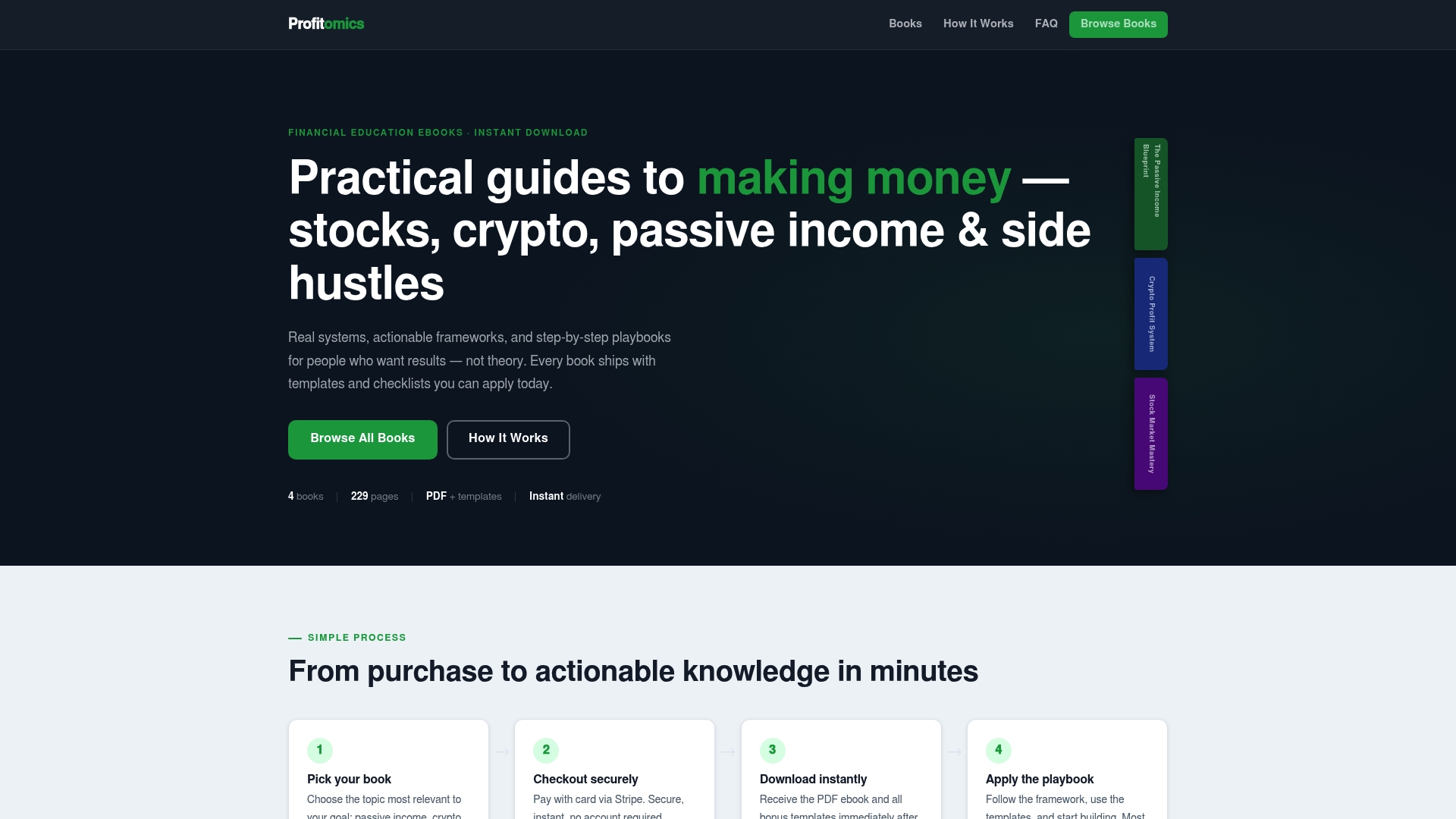
You get instant PDF delivery after checkout. Prefer a different focus? Browse the full range of ebooks on Profitomics.
FAQ
Are online risk management courses worth it for beginners?
Yes, when they end with something you can apply. Courses that stop at explaining concepts rarely change behavior. Look for position-sizing tools, exit rules and checklists, and judge value by whether your next trade follows a written plan.
How long does it take to learn basic risk management?
The ideas take an afternoon. The habit takes weeks of using them. Course length varies widely: Udemy’s beginner pick runs about 6.5 hours of video, and Yale’s Financial Markets has 130 lessons across seven modules. A practical ebook lets you set up your rules in a single sitting and refine them as you trade.
Do I need a certificate?
For managing your own money, no. Some video courses offer completion certificates, and Morningstar’s Investor Classroom offers none. Professional risk credentials matter if you want a risk career, which is a separate goal from protecting your portfolio.
What is the cheapest way to start?
Compare the total you will pay, not the headline price. A one-time purchase such as the $27 Passive Income Blueprint or the $47 Stock Market Mastery stays fixed, while subscriptions like Coursera Plus at $59 a month grow with your time. Check current prices at checkout, since they change.
Can a course guarantee I will not lose money?
No course can. All investing and trading carries risk of loss, and risk management reduces and controls it rather than removing it. Only invest money you can afford to lose, and speak to a licensed financial adviser about your own situation.
Sources
- Best Investing Courses for November 2026, Investopedia
- Best Online Stock Trading Classes for November 2026, Investopedia