Publisher Proven Steps to Sell Notion Templates in the U.S.
The fastest route to real income is a narrow, outcome-focused template (a spreadsheet or PDF toolkit built for one specific financial task) packaged with a clear quick-start guide and realistic previews. Build a product folder today with a 01-Start-Here.pdf, one editable file, a filled example, and a plain-language license. Some financial education providers pair templates with ebooks, and that combination is a model worth considering.
TL;DR:
- Focus on creating a narrow, outcome-based template with a clear quick-start guide and realistic previews to increase user engagement and reduce refunds.
- Packaged structure should include an introductory PDF, an editable file, a filled example, and a plain-language license, with professional mockups for better conversions.
- Price templates based on the outcome they deliver and offer at least two tiers, with order bumps like checklists or examples to boost sales.
- Ensure legal compliance by including clear terms on usage rights, resale restrictions, refund policies, and support, while avoiding personalized investment advice claims.
- Build a launch sequence with a free sample, targeted community posts, and small paid tests to validate demand and optimize listing performance before scaling.
Table of Contents
- How Do You Start to Sell Notion Templates for Finance?
- How Do You Package a Template So Buyers Actually Use It?
- What Should You Charge for a Finance Template?
- What Legal Terms Do You Need Before You Sell?
- Where Should You Sell and What About Sales Tax?
- How Do You Launch a Template With No Audience?
- What Happens After Someone Buys?
- Why Profitomics Pairs Templates With Every Ebook
- Get Ready-Made Finance Templates and Ebooks From Profitomics
- Sources
- FAQ
How Do You Start to Sell Notion Templates for Finance?
Most creators fail before launch because they build something generic. A “budget tracker” competes with a thousand others; a “debt payoff tracker for freelancers with irregular income” does not. Specificity is the single biggest lever for perceived value and conversion, according to a breakdown of templates people actually buy.
Pick your buyer before you pick your features. Three profiles convert reliably in the finance space:
- The side-hustle starter who needs a simple system to track a first stream of income (freelance invoicing, Etsy shop, gig work).
- The new investor who wants a structured way to log trades, dividends, or portfolio allocation without spreadsheet anxiety.
- The debt-payoff planner who needs a visual, motivating system to knock out credit cards or student loans on a set timeline.
Your minimum viable product needs four pieces: the core editable file, a version already filled out with sample numbers, a quick-start PDF, and a license file. Before you build further, check three signals: active discussion of the problem in forums or Reddit threads, real search volume for the pain point, and a gap where existing templates are either too generic or poorly documented.
How Do You Package a Template So Buyers Actually Use It?
A file that looks abandoned in a folder gets refunded. A file that feels guided gets used, and used templates generate reviews and referrals. Organized packaging with instructions and mockups measurably increases conversion and cuts refund rates.
Structure every product the same way:
01-Start-Here.pdfsits at the top of the folder and opens first.- An
Editable-Filesfolder holds the working spreadsheet or document, untouched and ready to duplicate. - An
Examplesfolder shows the same file already filled in with realistic numbers. Commercial-License.pdfspells out usage rights in plain terms.
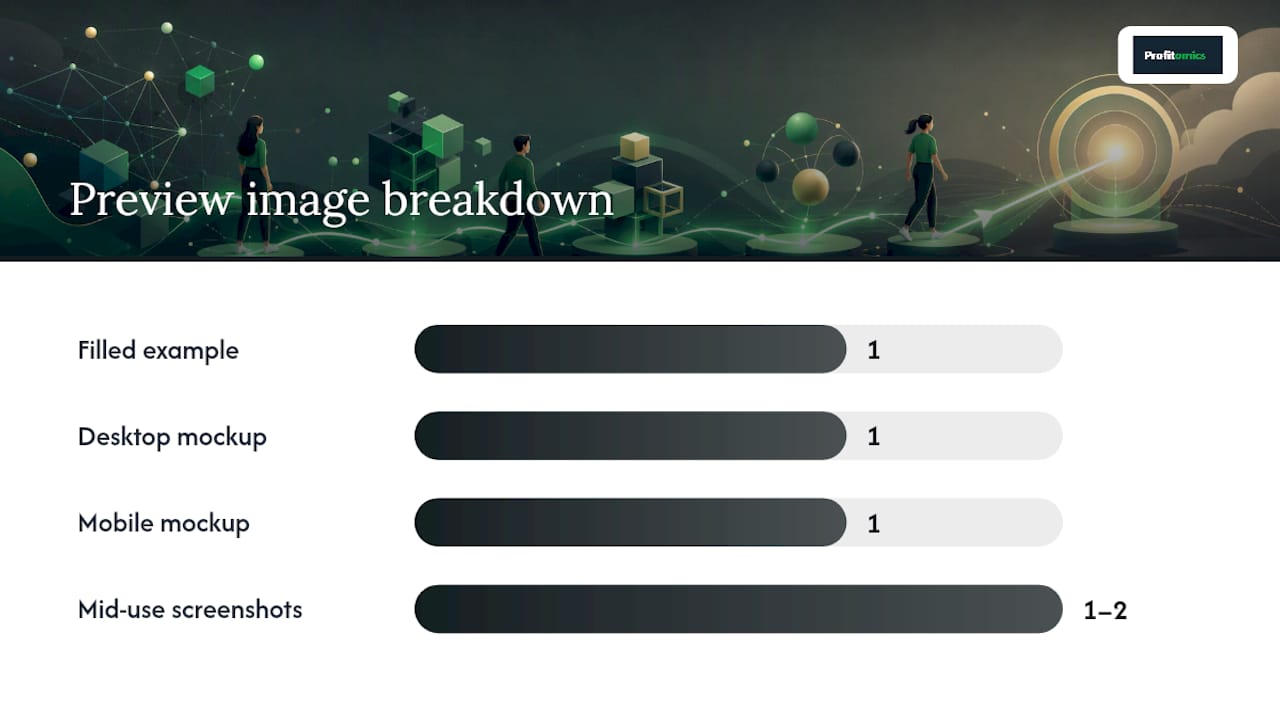
For previews, create at least five to eight images: a filled-out example, a desktop mockup, a mobile mockup, and one or two screenshots showing the product mid-use. Generic file-icon thumbnails convert worse than screenshots of a real, completed plan.
Your quick-start PDF needs three sections: what to open first, what software or app it’s compatible with (Excel, Google Sheets, Notion, or otherwise), and where to get support if something breaks.
Pro Tip: Write the quick-start guide as if the buyer has never opened a spreadsheet before. The goal is a working result inside five minutes, not a tour of every feature.
What Should You Charge for a Finance Template?
Price to the outcome, not the hours you spent building it. A tracker that helps someone pay off $8,000 in credit card debt is worth more to that buyer than the two afternoons it took you to design it. Template pricing tends to fall into three recognizable tiers, according to Nevuto’s breakdown of digital product pricing:
- Entry tier, low price for a single-purpose tracker or checklist, low friction, impulse-buy territory.
- Implementation toolkit, mid-range price for the tracker plus a workbook, a walkthrough, and maybe a short video.
- Premium bundle, higher price range for multiple templates combined with a guide or mini-course, positioned as a full system.
Order bumps work especially well in finance: pair a debt calculator with a printable payoff checklist, or bundle an investment tracker with a filled-out example portfolio plan. Offer at least two tiers on every listing. A buyer who wouldn’t pay $19 for the base tracker might pay $49 for the version that includes a done-for-you example and a support email.
What Legal Terms Do You Need Before You Sell?
Skipping the legal basics is the most expensive shortcut in this business. Every download and every checkout page needs plain-language terms covering four things:
- Personal versus commercial use, stated clearly so buyers know whether they can resell or redistribute your file.
- No resale, no redistribution as a standalone rule, separate from the personal/commercial distinction.
- A defined refund window, typically seven to fourteen days, stated before purchase, not after a complaint.
- A version and support note, so buyers know what update policy they’re getting.
If you mention income potential anywhere in your marketing, the FTC expects a reasonable, substantiated basis behind that claim, and testimonials must reflect typical results or disclose when they don’t, according to GRSM’s compliance guidance for financial publishers.
There’s a sharper line most creators miss entirely: general education is legal to sell without a license; personalized investment advice is not. The same guidance warns that individualized coaching, one-on-one portfolio recommendations, or “tell me what to buy” style tailoring risks being classified as personalized investment advice under U.S. rules. Keep your templates structural (how to track, how to plan, how to calculate) and add a disclaimer stating the material is educational, not individualized advice. Never comment on a specific buyer’s holdings.
Where Should You Sell and What About Sales Tax?
Your platform choice depends on what you already have. If you have zero audience and want built-in discovery, list on Etsy first. If you want the simplest checkout with no storefront to manage, Gumroad works well for a single product or small catalog. If you’re planning a real brand with multiple products and email capture, Shopify gives you checkout control worth the setup time. If your template pairs with a course or video walkthrough, Teachable handles both the download and the lesson content in one place.
Tax is where creators get burned quietly, months after launch. Digital goods are taxable in a growing number of states, and remote sellers must track economic nexus thresholds, commonly $100,000 in sales or 200 transactions in a state, according to DodoPayments’ state-by-state sales tax breakdown. Cross that threshold and you may owe registration and collection duties in that state, even without a physical presence there.
Before your first sale, run this checklist:
- Confirm whether your chosen platform acts as a marketplace facilitator that collects and remits tax on your behalf, since platform tax roles vary widely.
- Check your home state’s nexus threshold and any state where you’re seeing concentrated sales.
- Register for a sales tax permit in any state where you’ve crossed a threshold and the platform doesn’t handle collection for you.
- Separate downloadable files from any bundled live coaching in your pricing, since bundling a service with a digital good can change how a state taxes the whole package, per RJM Tax Exemption’s rundown of online course taxation.
How Do You Launch a Template With No Audience?
You don’t need a following to get your first ten sales. You need a sequence.
- Build your product mockups and one free lead magnet, a simplified one-page version of your paid template, before you write a word of sales copy.
- Write your listing copy around one explicit outcome (“track your debt payoff in under 10 minutes a week”), not a feature list.
- Send a three-email launch sequence to your list: the problem, the free sample, the paid offer.
- Create five Pinterest pins using your mockups, each testing a different headline angle.
- Post once in a relevant community (a subreddit, a Facebook group, a Discord server) where sharing tools is welcomed, not where it reads as spam.
- Run one small paid test, $20 to $50, on the highest-performing pin or post to confirm the offer converts before you scale spend.
Track four numbers from day one: listing views, click-through rate, conversion rate, and the actual reasons behind any refunds. If refunds cluster around one complaint (confusing setup, wrong software compatibility), that’s your next fix, not your next product.
Pro Tip: Your first 48 hours of data matter more than your gut feeling. If a Pinterest pin gets clicks but zero sales, the problem is usually your listing page, not your template.
What Happens After Someone Buys?
The sale is the beginning, not the finish line. A buyer who feels guided through setup becomes a repeat customer; a buyer who opens a confusing zip file leaves a bad review or asks for a refund.
Every download should include:
- A
Start-Hereguide restating first steps, even if it duplicates what was on the sales page. - A short FAQ covering the three questions you’ll get most (compatibility, editing, support contact).
- The pre-filled example file, so buyers see a finished result before building their own.
Watch three signals to prioritize fixes: support message themes, refund reasons, and repeated phrases in reviews. If five buyers ask the same setup question, that’s a gap in your guide, not a coincidence.
Once your first template sells consistently, build the natural upsell: a companion checklist, a workbook version, or a bundle with a full ebook like Profitomics’ investing spreadsheet templates.
Why Profitomics Pairs Templates With Every Ebook
Profitomics builds templates into every ebook because a checklist without an action step is just information. Readers of The Passive Income Blueprint get the spreadsheet, not just the theory behind it.
My tactical read on this business: start with one narrow template, ship it, and let real buyer feedback tell you what to build next. Chasing a broad “finance bundle” before validating one focused product is the most common way creators burn months with nothing to sell.
— Kai
Get Ready-Made Finance Templates and Ebooks From Profitomics
Building your own template from scratch takes real time: research, design, testing, documentation. Some providers offer ebooks bundled with companion materials such as editable spreadsheets, checklists, and quick-start instructions for stocks, crypto, or passive income systems.
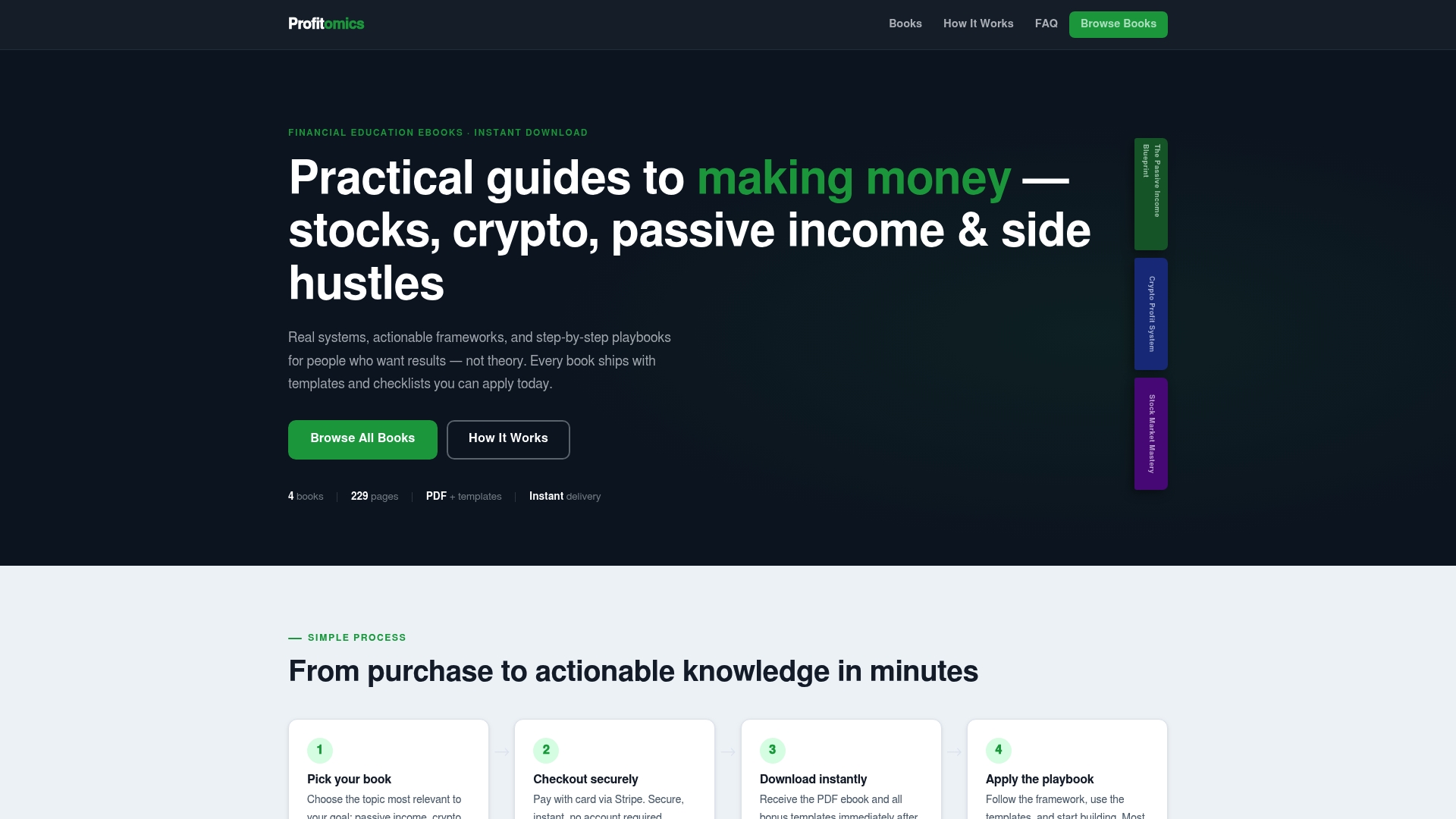
If you want to see the packaging standard in action before creating your own, preview Stock Market Mastery, which pairs a swing-trading and compounding framework with companion templates you can study for structure and pricing ideas. Or start broader with Profitomics’ full library to see how ebooks and templates are bundled across passive income, investing, and crypto topics. Either way, you walk away with a real example of a finished, professionally packaged product instead of guessing at your first draft.
This article is general information, not a substitute for advice from a qualified financial advisor. Consult a qualified financial professional about your own circumstances before acting on anything here.
Sources
- Legal Compliance for Financial Publishers and Trading Educators (GRSM) — January 2026
- Observed
- How to Sell Digital Products Online: The 2026 Playbook — Nevuto (2026-07-17)
FAQ
What’s the fastest way to sell notion templates or finance templates online?
Build one narrow, outcome-focused template, package it with a quick-start PDF and realistic mockups, and list it on a platform like Etsy or Gumroad within a week.
Do I need to collect sales tax on digital templates?
Often yes. Digital goods are taxable in many states, and crossing a threshold like $100,000 in sales or 200 transactions can trigger registration and collection duties.
Can I include income claims in my template marketing?
Only if you can substantiate them. The FTC requires a reasonable basis for any earnings claim and expects testimonials to reflect typical customer results.
What’s the difference between a template and personalized financial advice?
A template teaches a repeatable process; personalized advice comments on someone’s specific holdings or situation. Stick to educational, structural content and add a clear disclaimer to stay on the safe side.
Where should beginners with no audience sell their first template?
Etsy for built-in discovery, or Gumroad for a simple direct checkout, both work well for a first product before you have an email list or following.