Audience Research Questionnaire: Questions, Structure, Analysis

An audience research questionnaire is a short, structured set of questions sent to a defined group of people, so you learn who they are, what they are trying to achieve, what gets in their way and how they buy. A good one starts from a single decision you need to make, mixes a few screening questions with goal, behavior and objection questions, and ends with one open comment box. Below you get the structure, a ready-to-use question bank, the interview questions that back it up and a method for turning answers into a customer avatar.
TL;DR
- Write one sentence naming the decision the research will inform, then cut every question that does not help answer it.
- Send it only to people whose answers matter: current customers, subscribers or people who fit the buyer you want.
- Order the questions as screening, goals and frustrations, buying behavior, then one open question. Keep it short.
- Ask about what people did in the past, not what they say they would do.
- Cluster the answers into themes, count them, and build your avatar only from patterns that repeat.
Table of Contents
- Start with the decision, not the questions
- Decide who you are asking
- How to structure the questionnaire
- A question bank you can copy and adapt
- Write questions that do not bias the answers
- Add interviews: the discovery questions that test a problem
- Turn answers into a customer avatar
- Analyze the responses so they change a decision
- Our perspective
- Put your research to work
- FAQ
- Sources
Start with the decision, not the questions
Most questionnaires fail before the first question is written. QuestionPro recommends starting from a single business question written as one sentence, then checking every survey question against it and cutting anything that does not help answer it. Its author names skipping this step as the most common reason surveys produce data nobody uses.
Some examples of decision sentences:
- “Should my first digital product teach beginners to invest, or teach side hustlers to price their skills?”
- “Which objection stops newsletter subscribers from buying a $29 guide?”
- “What do first-time car flippers worry about most before they buy a car?”
Notice that each one is a choice you will actually make. “Learn more about my audience” is not a decision, and it produces questionnaires full of interesting trivia.
Decide who you are asking
An audience survey collects feedback from a defined group, such as customers, subscribers or event attendees, chosen because they already have a relationship with the brand or topic. That gives you three practical audiences to pick from:
- Existing customers. Best for finding out why they bought and what almost stopped them.
- Subscribers or followers. Best for topics, formats and channels.
- Prospects who fit your target buyer. Best for testing whether a problem is real before you build anything.
The Institute for Nonprofit News adds a point that applies far beyond news: an audience is made of many constituencies, not one block, and splitting responses by group can show an opinion that looks like a minority view overall but is concentrated in one segment. So add the questions you need to split the data later, such as experience level or how they found you.
How to structure the questionnaire
QuestionPro’s buyer persona survey guidance suggests screening questions first, then behavioral and motivation questions, and an open comment field last. That order works because easy factual questions warm people up, and the open box catches what you did not think to ask.
| Block | Purpose | Typical number of questions |
|---|---|---|
| Screening and demographics | Confirm they fit and let you segment | 3 to 5 |
| Goals and frustrations | Understand what they want and what blocks them | 3 to 4 |
| Buying behavior | Learn how they research, compare and decide | 3 to 4 |
| Objections and alternatives | Find what stops or almost stopped a purchase | 2 to 3 |
| Open comment | Catch the unexpected | 1 |
That adds up to roughly 12 to 17 questions at most, which is deliberately lean. SurveyMonkey notes that 8 to 10 questions can provide more than enough information to form buyer personas, and that such a survey should include at least one open-ended question.
How long should it be?
It depends on your relationship with the respondent. Google News Initiative gives the best practice of ten questions or fewer for higher completion rates. The Institute for Nonprofit News, writing about an annual audience survey, says 10 to 15 minutes, often about 40 questions, with each question limited to seven or fewer answer options. A small business surveying cold subscribers should sit near the short end. A loyal community that expects a yearly check-in can handle more.
A question bank you can copy and adapt
These questions are written in plain language and grouped by block. Swap the bracketed parts for your own topic.
Screening and demographics
Google News Initiative suggests opening with demographic questions such as gender, age, location, household income and education. Ask only what you will use. If income will not change a decision, leave it out.
- What is your age range?
- Where do you live (state or country)?
- Which best describes your experience with [topic]: brand new, a few months in, or more than a year?
- Which of these best describes your current situation (employed, self-employed, student, other)?
Goals and frustrations
Mailchimp’s list of buyer persona questions includes psychographic questions about personal goals, success, frustrations and admired brands. Quantilope’s examples include asking about goals for the year and top priorities in life. Adapted:
- What is the main thing you want to achieve with [topic] in the next 12 months?
- What does success look like for you, in concrete terms?
- What is the biggest frustration you have had so far?
- Which brands, creators or publications do you trust most on this topic, and why?
Buying behavior
Surveyflip recommends purchase behavior questions on how often people buy in a category, what triggers a purchase and who makes the final decision. HubSpot’s buyer persona questions go further into the journey, asking what makes someone trust a vendor and how they compare options. Adapted:
- When did you last buy a [guide, course, tool] on this topic?
- What usually triggers you to start looking for one?
- How much did you spend, roughly?
- How do you compare options before you buy?
- Who else, if anyone, weighs in on the decision?
Objections and alternatives
Qualaroo’s list includes questions that surface hidden needs: what almost stopped you from buying, how you are solving the problem today, and what made you look for a solution now rather than six months ago. These are the highest-value questions in the whole questionnaire.
- What almost stopped you from buying?
- How are you handling this problem right now?
- What made you start looking for help now?
- What red flags make you walk away from a product like this?
The open question
End with something like: “Is there anything we should have asked but did not?” Read every answer. Often the best insight is in the last box.
Write questions that do not bias the answers
Small wording choices change results. Four habits keep the data clean:
- One idea per question. “How easy and affordable was it?” is two questions.
- Neutral wording. Compare “How much did you enjoy our guide?” with “How would you describe the guide?” The first assumes enjoyment.
- Seven or fewer answer options. The Institute for Nonprofit News caps each question at seven options or fewer.
- Every question earns its place. The same guide says to include only questions that serve a certain purpose and whose responses someone will actually read.
Know who your channel leaves out
The same guide warns that surveys only reach people who take surveys, and that email distribution adds layers of bias, since older white audiences are more likely to share an email address, read newsletters and answer surveys. If your list skews one way, supplement it with a second channel, such as a community post or a short set of interviews, before you treat the results as your whole market.
Add interviews: the discovery questions that test a problem
A questionnaire tells you what many people say. Interviews tell you why. Message Lab Media recommends a two-step process: a brief survey of 10 to 15 questions followed by 5 to 7 interviews of 30 minutes or less, and says 3 to 5 interviews is likely enough for a small organization with a focused audience.
Ask about the past, not the future
Foundersbase calls this the single most important rule in customer discovery: ask about what happened, not what people would do. Instead of “Would you use a tool that does X?”, ask “Walk me through the last time this happened.” You get a concrete story instead of a polite opinion.
The same guide warns against pitching during the interview, which produces polite lies that feel like validation. Treat compliments as worthless and specific past actions as gold.
Problem questions from an official guide
The North Dakota Department of Commerce guide suggests problem discovery questions such as “What’s the hardest part of your day?” and “What are some unmet needs you have?” For validation it suggests asking how important the value you deliver is and “Tell me about the last time you [process you’re improving].”
What 10 to 15 interviews should tell you
Preuve.ai says that after 10 to 15 interviews you should know whether the problem is real, how people handle it today, how painful it is, whether they would pay, and who the buyer is. Its test is useful: if someone has tried nothing to fix the problem, the pain is probably not strong enough to drive a purchase. If they have tried three tools and none worked, you have found a gap.
For surveys, Mapster suggests a 1 to 5 pain scale, where 40% or more rating 4 or 5 is a strong signal the problem is worth solving. Treat that as a rule of thumb from one source, not a law.

Turn answers into a customer avatar
An avatar (also called a persona) is a one-page profile of your target buyer. The common worksheet has six sections, as laid out by Purple Wave Creative: demographics, professional context, psychographics and lifestyle, pain points, goals and aspirations, and information and buying behavior. It stresses that an avatar should rest on real customer data, such as survey answers and sales data, and on patterns across them.
A small-business version from 20 Minute Marketing includes demographics, goals and motivations, pain points and fears, decision triggers and where they spend time online. It advises starting with five to ten of your best existing customers and interviewing a few of them.
Here is a worksheet you can fill in from your results:
| Section | Fill it from | Example entry (illustrative) |
|---|---|---|
| Who they are | Screening answers | Employed, 25 to 34, first year investing |
| Goal | Goals question | Build a second income without quitting a job |
| Frustration | Frustration and objection questions | Too much theory, no clear first step |
| Trigger | “Why now?” question | A raise, a layoff scare, a friend’s success |
| Buying behavior | Behavior block | Reads reviews, compares two or three options |
| Where they are | Trust and channel questions | YouTube, Reddit, newsletters |
The example entries are placeholders to show format, not findings. Yours must come from your own responses.
Avatars built from direct research beat internal guesses. 20 Minute Marketing, citing Nielsen Norman Group research, notes that even brief, informal interviews outperform assumptions.
Analyze the responses so they change a decision
Collecting answers is half the work. UnitQ advises looking for recurring themes, recording how many participants mention each, which segments mention it, and the strength of the problem. Then prioritize by frequency, severity, number of affected customers and fit with business goals.
A simple process:
- Read everything once without coding. Note surprises.
- Tag each answer with a theme. Use short labels such as “too complex” or “no time”.
- Count themes and split by segment. A theme from 12 of 40 beginners is different from 12 of 40 experienced people.
- Rank by frequency and severity. Frequent and painful goes first.
- Write a recommendation tied to evidence. One decision, backed by several responses.
Reforge describes the same logic: review data participant by participant, cluster findings into insights, and check whether they close the evidence gap for the decision. Keeping the decision in focus also helps limit bias and keeps you open to insights you were not looking for.
Our perspective
We build step-by-step guides for people who want to act, not just read, so we care about research that ends in a clear first move. A questionnaire is only useful if it points to a concrete next step.
The mistake we see most often is collecting opinions about a big, vague idea. Ask beginners about a specific first deal, a first trade or a first week of a side business, and ask what they did last time. Those answers tell you where a template or a checklist would save someone hours.
That is how we approach our own guides: practical systems, worksheets and checklists that remove theory and let a beginner start right away. Treat your audience research the same way. Keep it short, ask about real behavior, and turn each pattern into something people can use.
Kai
Put your research to work
Once you know who your buyer is, the next job is turning that into an income stream or a product. If your results show you that people want a simple way to turn skills into income, our Side Hustle to Six Figures guide is $29 one-off and comes as an instant PDF with companion bonus materials. If they want to start with several income streams, the Passive Income Blueprint is $27 one-off and is designed to help you build multiple income streams within 14 days.
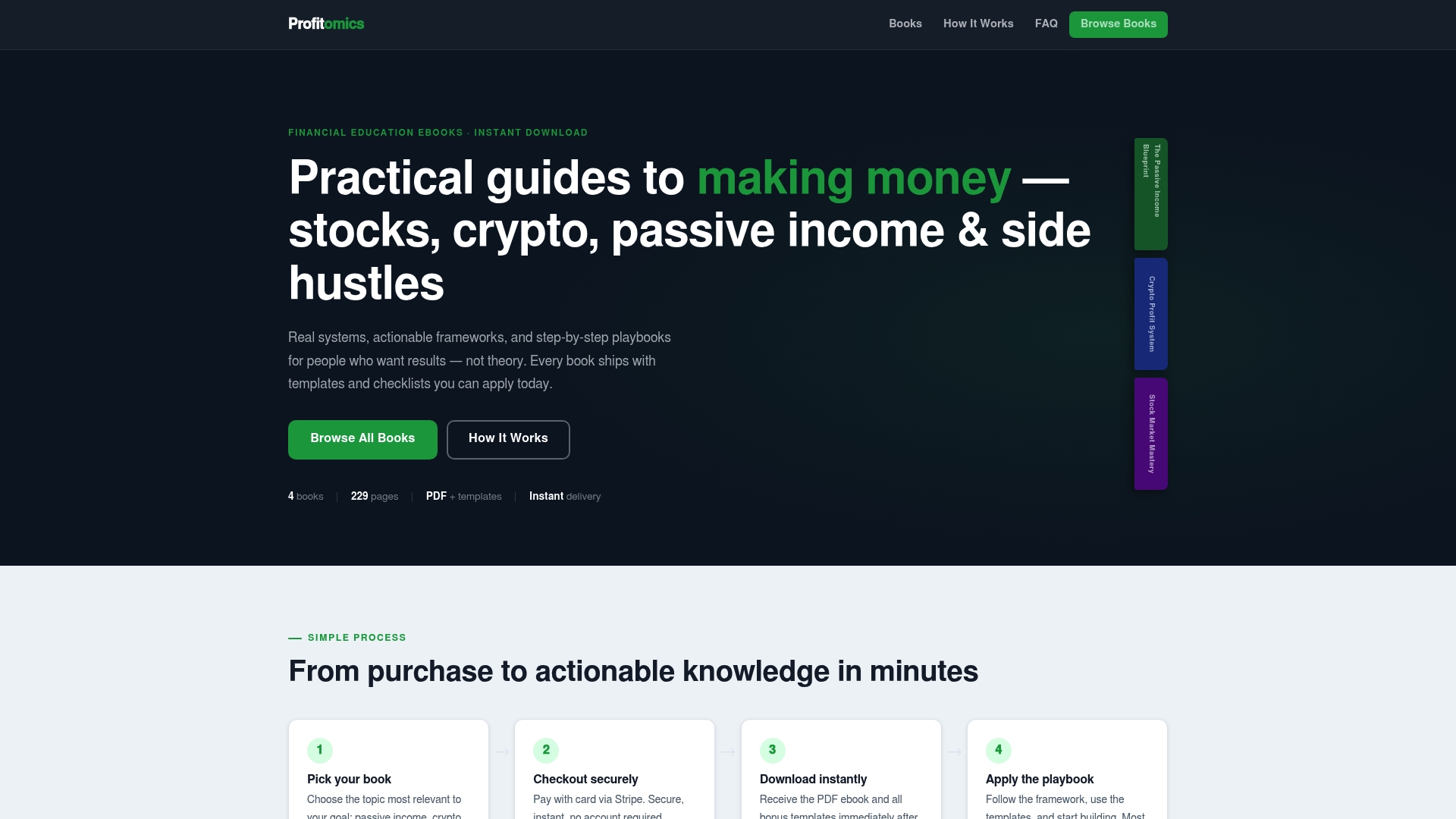
Both are built around frameworks, templates and checklists you can use right after download. You can browse the full range on the Profitomics home page.
If you are researching an online business, our guides on ecommerce courses and email marketing courses show how we evaluate learning resources, and they pair well with the questions above.

FAQ
How many questions should an audience research questionnaire have?
For a cold audience, aim for ten or fewer, which Google News Initiative gives as the best practice for completion. For a persona survey, SurveyMonkey says 8 to 10 questions can be enough. Only go toward 40 if your respondents are loyal and expect a longer check-in.
What is the difference between customer research questions and customer discovery questions?
Customer research questions describe an existing or potential audience: goals, habits, buying behavior. Customer discovery questions test whether a problem is real and how people solve it today. Use research questions in a survey and discovery questions in interviews.
What should a customer avatar worksheet include?
A common structure covers demographics, professional context, psychographics, pain points, goals and buying behavior. Fill each section from real survey and interview answers, and keep only the patterns that repeat across respondents.
How many people do I need to interview?
Message Lab Media suggests 5 to 7 interviews after a short survey, and 3 to 5 for a small organization with a focused audience. If you are validating a new problem, Preuve.ai points to 10 to 15 interviews.
Should I include open-ended questions?
Yes, at least one. SurveyMonkey recommends including an open-ended question in a persona survey, and QuestionPro suggests placing an open comment field last. Read every response, since they often reveal what your closed questions missed.
Sources
- QuestionPro: Audience Survey
- Institute for Nonprofit News: Audience Survey Guide
- QuestionPro: Buyer Persona Survey
- SurveyMonkey: Create Buyer Personas With Surveys
- Google News Initiative: Learn more about your audience with surveys
- Mailchimp: Buyer Persona Questions
- Quantilope: Market Research Questions
- Surveyflip: Market Research Survey Questions
- HubSpot: Buyer Persona Questions
- Qualaroo: Market Research Questions to Ask Buyers
- Message Lab Media: Why Audience Research Matters
- Foundersbase: How to Run Customer Discovery Interviews
- North Dakota Department of Commerce: Problem Discovery Questions
- Preuve.ai: Customer Discovery Interviews
- Mapster: Customer Discovery Survey
- 20 Minute Marketing: Buyer Personas for a US Small Business
- UnitQ: Customer Interviews to Product Decisions
- Reforge: Leverage User Research for Decision-Making