Best Ecommerce Courses: Build a Store, Not Just a Certificate

For most people trying to launch a store fast, a project-based practical course beats a lengthy certificate. The single best pick is Make the Sale: Build, Launch, and Manage E-commerce Stores, which has you build a mock Shopify store while covering ads, fulfillment, and optimization. Career-track learners get more mileage from a full certificate; everyone else is better served by a short, hands-on course that ends with something real.
TL;DR:
- The Google certificate takes about 190 hours and typically costs around $49 monthly after its trial, so completion speed affects total cost.
- For a career pivot, choose the certificate; for a store launch within weeks, pick a short course with a build project instead of fragmented tutorials.
- Before enrolling, confirm the final deliverable uses a real or simulated platform, check for a graded project and support, and compare refund policies.
- After finishing one project, test one product and landing page through a single traffic source for seven to fourteen days on a small paid budget.
Table of Contents
- 1. Top Recommended Courses and What Each Teaches
- 2. Should You Pick a Certificate, a Short Course, or Free Tutorials?
- 3. How to Choose the Right Ecommerce Course Quickly
- 4. Skills and Tools Top Ecommerce Courses Actually Teach
- 5. Turning Course Projects Into First Revenue
- 6. When to Stop Studying and Start Selling
- Pair Your Course Project With a Revenue-Ready Checklist
- FAQ
- Sources
1. Top Recommended Courses and What Each Teaches
The strongest courses share one trait: they end with a deliverable you can point to, not just a certificate you can list.
- Make the Sale: Build, Launch, and Manage E-commerce Stores: best for launchers who want a guided build. It is part of the Google Digital Marketing & E-commerce Professional Certificate and walks you through building a mock Shopify store, running ads modules, and handling fulfillment basics. The standout is the hands-on store lab itself, not a lecture about one.
- Google Digital Marketing & E-commerce Professional Certificate: best for career-track learners aiming at entry-level marketing or ecommerce roles. The program runs about 190 hours under Coursera’s subscription pricing, and covers Shopify, Google Ads, and Google Analytics across its full sequence. It is the closest thing to a credential employers recognize in this space.
- Shopify Dropshipping Mastery: Start Your Online Store: best for anyone who wants a live, branded store rather than a mock one. It covers supplier sourcing, product selection, and scaling tactics like upsells and cart recovery aimed at producing first sales and a six-month growth plan.
- E-commerce Marketing and Email Campaigns: best for store owners who already have traffic but weak retention. It focuses on segmentation, A/B testing, and the conversion metrics that turn one-time buyers into repeat customers.
- Udemy and similar short tutorials: best for patching one specific gap, like learning Meta Ads Manager or Klaviyo flows, when you do not need a full curriculum.
Reviews and completion data matter more than course length when you compare options. A course with thousands of learner ratings and a visible project component, like the Google certificate’s capstone or Shopify Dropshipping Mastery’s live store build, tends to translate into usable skill faster than a long video series with no deliverable. If you are choosing between two similar options, let the presence of a graded project break the tie, not runtime.
Pricing models differ sharply between these paths. The Google certificate runs on Coursera’s subscription, typically around $49 a month after a trial period, while shorter standalone courses are often a single flat fee per course. Factor your expected completion speed into which pricing model actually costs less for you.
2. Should You Pick a Certificate, a Short Course, or Free Tutorials?
Every ecommerce learner fits into one of three buckets, and picking the wrong one wastes both time and money.
Paid professional certificates, like the Google Digital Marketing & E-commerce Professional Certificate, offer the most depth and the most recognizable credential, but they ask for a real time commitment under a recurring subscription. Short practical courses, like Make the Sale or Shopify Dropshipping Mastery, trade breadth for speed: you pay once, finish in days or a few weeks, and walk away with a built store rather than a resume line. Free tutorials fill narrow gaps well, such as learning one ad platform or one app integration, but they tend to be fragmented and rarely include a structured project.
- Career pivot into marketing or ecommerce roles: choose the professional certificate for the credential and the full skill sequence.
- Side-hustle launch in the next few weeks: choose a short practical course with a build-your-own-store component.
- Patching a specific skill gap: choose a free tutorial on that one topic, like email automation or ad targeting.
The mistake most learners make is defaulting to the biggest, longest program regardless of goal. A six-month certificate is wasted effort if all you need is a working store and a first sale this month.
3. How to Choose the Right Ecommerce Course Quickly
Before buying anything, run the course page through a short checklist.
- Match the outcome to your goal: decide whether you want a launched store, a job-ready resume line, or one isolated skill like SEO or paid ads.
- Check for a real project: look for a graded store build, a portfolio assignment, or a platform lab using Shopify, not just quizzes.
- Confirm the total time commitment: a course listing 190 hours demands a different schedule than one listing 10 hours.
- Verify the pricing model: a flat one-time fee behaves very differently from a monthly subscription if you finish slowly.
- Look for a refund policy and support access: course pages that hide this information or offer no instructor contact are a red flag.
Pro Tip: Skim the course’s syllabus for the word “build” or “launch” in a module title. If every module is passive video with no build step, expect a certificate but not a usable skill.
Ask the course provider directly, through a support page or FAQ, what the final deliverable looks like and whether it uses a real platform like Shopify or a simulated one. A course that cannot answer that clearly in its own marketing usually will not answer it well in the content either.
4. Skills and Tools Top Ecommerce Courses Actually Teach
The best courses map directly to tasks you will perform as a store owner, not abstract theory.
- Store setup: Shopify store configuration, product listings, theme customization, and checkout optimization.
- Paid acquisition: Google Ads and Meta ads campaign structure, budgeting, and targeting basics.
- Organic acquisition: SEO fundamentals and content strategies that reduce reliance on paid spend.
- Retention marketing: email automation and segmentation, the focus of courses like E-commerce Marketing and Email Campaigns.
- Analytics and operations: GA4 tracking, basic attribution, and fulfillment or shipping workflows.
This course content keeps shifting toward blended skills. Industry commentary on the Google certificate notes a move toward holistic business skills, including market research and value proposition work, layered on top of platform mechanics like Shopify and Google Ads. That shift matters because a course teaching only button-clicking on one platform ages faster than one teaching you how to think about positioning and customer value.
5. Turning Course Projects Into First Revenue
A finished course project is practice, not proof; to move forward, consider how to sell digital downloads effectively as part of your next steps. The next step is a scoped revenue test: pick one product, build one landing page, choose one traffic source, and run it for seven to fourteen days on a small paid-traffic budget before deciding whether to scale.

This is where our Passive Income Blueprint checklists shorten the gap between finishing a course and seeing a sale, because they hand you the validation steps and tracking templates instead of asking you to design them from scratch. Iteration with a small peer group, rather than enrolling in another course, is usually what moves a stalled project forward.
6. When to Stop Studying and Start Selling
Timebox your learning to one project, finish it, then run a real test instead of starting another course. Course-hopping feels like progress but delays the one thing that actually teaches you anything: a live product in front of real buyers.
— Kai
Pair Your Course Project With a Revenue-Ready Checklist
A finished Shopify course project gives you a store. It does not give you a tested offer, a validated price point, or a plan for the first fourteen days of traffic. That gap is exactly what our eBooks at Profitomics close.
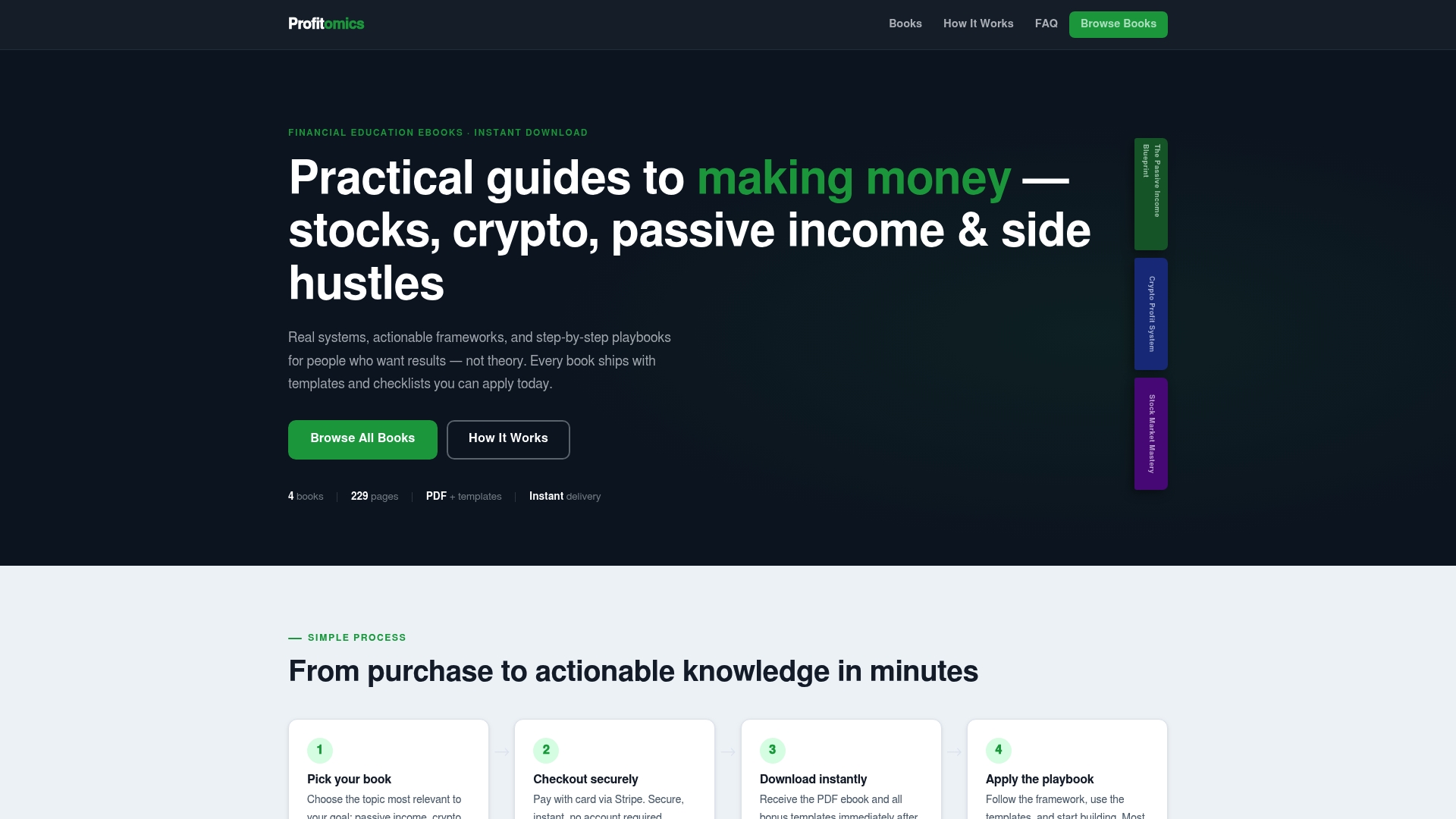
The Passive Income Blueprint walks through building multiple income streams with templates and checklists built for immediate use; current prices are on the pricing page. If your course project centers on physical or resale goods rather than a digital storefront, The Car Flipping Playbook applies the same step-by-step approach to sourcing, inspecting, and reselling vehicles for profit. Pair either guide with your course’s store build: use the course to learn the platform, use the checklist to run your first structured revenue test in fourteen days instead of guessing at next steps. Browse the full catalog of guides, including Stock Market Mastery and Side Hustle to Six Figures, at Profitomics and pick the one that matches what you just built.
FAQ
Will AI replace ecommerce jobs and skills?
AI is changing how ecommerce work gets done, automating tasks like ad copy drafting and customer support responses, but the core skills courses teach, like store setup, positioning, and analytics interpretation, remain the layer that directs those tools. Courses that blend platform mechanics with market research and value proposition work, as reviewers note is already happening in top programs, tend to stay relevant longer than narrow tool tutorials.
What are the main types of ecommerce business models?
Common ecommerce types include business-to-consumer, business-to-business, consumer-to-consumer, direct-to-consumer, dropshipping, subscription-based, and marketplace selling. Most beginner courses, including Shopify-focused ones, start with direct-to-consumer or dropshipping models because they require the least upfront inventory investment.
What are the top ecommerce platforms to learn?
Shopify is the platform most widely taught in beginner and practical courses, including both Make the Sale and Shopify Dropshipping Mastery. Other platforms commonly mentioned alongside it in course catalogs include WooCommerce, BigCommerce, and Squarespace, though course coverage of these varies.
Which ecommerce niches are growing fastest right now?
Course content increasingly points toward niches tied to sustainability, personalization, and digital or downloadable products rather than purely physical goods. If you are choosing a niche for a course project, our guide to digital product ideas can help narrow the options before you commit course hours to one direction.
Is a free tutorial enough to launch an ecommerce store?
A free tutorial can teach one skill well, like setting up a payment gateway or running a basic ad campaign, but it rarely covers the full sequence from store setup to first sale. For a complete launch, a structured course with a build-your-own-store project, paired with a focused execution checklist, tends to get you to revenue faster than stitching together scattered free content.
Sources
Direct course and program pages referenced above are listed here for readers who want to verify details or enroll directly rather than through a secondhand summary.