Best Affiliate Marketing Courses in 2026: How to Choose

The best affiliate marketing course is the one that matches your budget, your starting point and the kind of site you want to build. For most beginners that means starting with a free course, then paying for a structured program only once you know you will publish consistently. Below we compare the main options, their listed prices and what each is built for. We also give you a checklist for judging any course before you pay, and a low-cost way to get a structured plan if you want one.
TL;DR
- Free courses such as Ahrefs’ beginner course cover the basics in under two hours, with no sign-up. Use one first.
- Paid programs range from a few hundred dollars to about $1,500. Price does not tell you whether the course fits you.
- Check the instructor’s verifiable work, the last update, the refund terms and a syllabus that names topics, not slogans.
- Disclose affiliate links clearly. The FTC requires it, and a good course teaches it.
- If you want a structured plan without a four-figure price, our $27 and $29 ebooks come with templates and checklists.
Table of Contents
- How the main affiliate marketing courses compare
- Match the course to your situation
- How to judge any affiliate marketing course before you pay
- What every course should teach about disclosure
- Can you teach yourself affiliate marketing?
- Perspective: structure beats a bigger price tag
- A structured, low-cost way to start building income
- A simple plan for your first 30 days
- FAQ
- Sources
How the main affiliate marketing courses compare
The table below pulls together the courses that come up most often for beginners. Prices are as listed by the sources named in the notes below it. Programs change pricing often, so confirm the current figure on the provider’s own page before paying.
| Course | Listed price | Format | Best for |
|---|---|---|---|
| Ahrefs Affiliate Marketing Course for Beginners | Free | 16 lessons, 5 modules, about 1 hr 49 min | Learning the basics before spending anything |
| Simplilearn Affiliate Marketing Course with Certificate | Free | Video lessons, guides, exercises | Beginners who want a completion certificate |
| Pat Flynn, 1•2•3 Affiliate Marketing | $499 | Self-paced course | Beginners who like a guided, personality-led course |
| Matt Diggity, The Affiliate Lab | $997 | SEO-focused course and community | Learners serious about building SEO sites |
| Adam Enfroy, Blog Growth Engine | $1,497 | Blog-building program | Bloggers who want a big, blog-first system |
| Solo Build It! (SBI!) | $329.99 first year | Platform with training, hosting and tools | People who want training and site tools in one place |
The DemandSage comparison of affiliate courses lists the Pat Flynn course at $499 for beginners, the Affiliate Lab at $997 for beginner and intermediate learners, and Blog Growth Engine at $1,497 for all levels. Ahrefs’ free beginner course has 16 lessons in five modules. They cover affiliate basics, niches and programs, and creating affiliate content. Solo Build It! lists a first-year price of $329.99 and a 90-day money-back guarantee on its own site.
Free courses: the right first step
A free course answers the one question that matters before you spend anything: do you actually want to do this work? Ahrefs’ beginner course runs just under two hours in total, needs no sign-up, and walks through how affiliate marketing works, how to choose niches and programs, and how to write content that earns commissions.
Simplilearn also offers a free course with a digital certificate, issued when all modules are done. Its curriculum covers strategy, tools, email marketing, content creation, traffic generation and conversion optimization. A certificate will not impress a brand or an audience, but it is a useful nudge to finish.
Take one of these, then write down three things you still do not know. Those gaps are what a paid course should fill.
Mid-priced and premium programs
The Pat Flynn course sits at the entry end of paid options and is aimed at beginners. The Affiliate Lab is built around SEO and site building, so it suits learners who are happy to spend months on keyword research and content. Blog Growth Engine is the most expensive on the list and is positioned for blog-driven businesses.
Solo Build It! is a different shape. It bundles step-by-step training with hosting, a site builder, an email system and weekly live calls, so part of what you pay for is infrastructure rather than lessons alone. That can be convenient if you do not want to assemble your own tools.
One practical point: a $1,000 course does not teach a different kind of affiliate marketing than a free one. You pay for depth, community, feedback and structure. If you are the type who needs deadlines and people to answer to, that can be worth it. If you work well alone, it may not be.
Match the course to your situation
Pick by starting point, not by the loudest sales page.
- No money to spend yet: use the free Ahrefs and Simplilearn courses, then build a small practice site. Shopify’s guide to starting affiliate marketing with no money shows that you can begin with link-in-bio pages, YouTube descriptions and social captions rather than a full website.
- You want SEO and a content site: look at SEO-led programs, and read our guide on choosing a profitable affiliate niche first, because niche choice shapes everything after it.
- You want everything in one platform: compare all-in-one options on what is included, such as hosting, tools, support and the refund window.
- You plan to build an audience with email: a course that skips list building is incomplete. Our review of email marketing courses shows what to look for.
- You want to write a blog first: see our breakdown of blogging courses worth buying.
Expect a slow start whichever route you take. Preply’s beginner guide says that meaningful affiliate income takes 6 to 18 months to build, and it advises learning the core model before you spend on tools or courses.
How to judge any affiliate marketing course before you pay
Sales pages are written to convert. A short, repeatable check protects you from the weak ones. Use it on every course in the table above.
1. Check the instructor’s real track record
Look for work you can verify outside the course platform: live sites, published case studies, a LinkedIn history, interviews. Modern Marketing Institute suggests asking three questions about an instructor: have they managed real budgets for real clients, is their experience current, and can their credentials be verified. If the only trace of the teacher is the course’s own bio page, treat that as a reason to look harder.
2. Read the syllabus for specifics
A good syllabus names modules, topics and durations. Compare that with vague phrases. Phillip McCloud suggests writing down what a course actually promises and separating checkable statements from slogans. Step-by-step lessons, live support, templates and a defined access period can be checked. “Proven system” cannot.
3. Confirm it is current
Affiliate programs, search algorithms and platform rules shift quickly. A common checklist guideline is that a course should have been updated within the past 12 to 18 months. Look for a last-updated date, or ask support for one.
4. Know the support and refund terms
Find out whether lessons are recorded or live, whether anyone reviews your work, how long access lasts and what the refund window is. Read the refund policy before checkout and save a copy. Terms vary widely. Some programs advertise a 90-day guarantee, while others state that all sales are final, so do not assume.
5. Be skeptical of income screenshots
A hand-picked testimonial does not show what a typical student earns. Results depend on your time, existing skills, niche, consistency and audience, and no creator controls those for you. Prefer courses that describe what you will learn and do, not what you will earn.
6. Compare against the free route
Before paying, ask what the course gives you that Ahrefs, Shopify’s guides and the FTC’s free guidance do not. Good answers include feedback on your work, a community that responds, templates that save weeks, and accountability. If you cannot name one, wait.
What every course should teach about disclosure
Affiliate marketing comes with a legal duty, and a course that skips it is incomplete. The FTC says affiliates must clearly and conspicuously disclose their relationship to the retailer so readers can weigh the endorsement properly. A disclosure should be easy to notice when the review and the link are seen together. If they are separated, readers may not make the connection.
Search Engine Land’s beginner guide adds that the FTC recommends placing disclosures as close as possible to the link, rather than relying on footnotes or a separate About page. Check that your course covers this, because it applies from your first post.

Can you teach yourself affiliate marketing?
Yes, and many people do. The core loop is simple: pick a niche you know, join a reputable affiliate program, publish helpful content, send traffic to your links, and track clicks, conversions and revenue. Preply recommends building an email list from day one and learning SEO fundamentals as you go.
What self-study lacks is structure. Most people stall because they have no sequence, no checklist and no deadline. That gap is where a paid course earns its fee, and it is also where a low-cost, template-based guide can do the same job.
Perspective: structure beats a bigger price tag
We see the same pattern in readers who come to us after buying an expensive course. They did not lack information. They lacked a sequence they could finish.
That is why our guides strip out theory and give you step-by-step instructions, templates, checklists and worksheets you can use the same day. Whether you are evaluating a car flip or building an online income plan, the goal is to move from learning to informed action quickly, even with no prior experience.
If you are weighing a four-figure affiliate program, ask yourself whether you need more lessons or a clearer plan. For many beginners, a focused system at a fraction of the price is the better first purchase, and the savings can go into the tools and content that actually produce results.
Kai
A structured, low-cost way to start building income
If you want a plan you can follow this week rather than another long video library, our ebooks are built for that. Side Hustle to Six Figures costs $29 one-off and is for readers who want to turn skills into income. Passive Income Blueprint costs $27 one-off and is designed to help you set up multiple income streams within 14 days. Both are delivered instantly as PDFs with companion bonus materials.
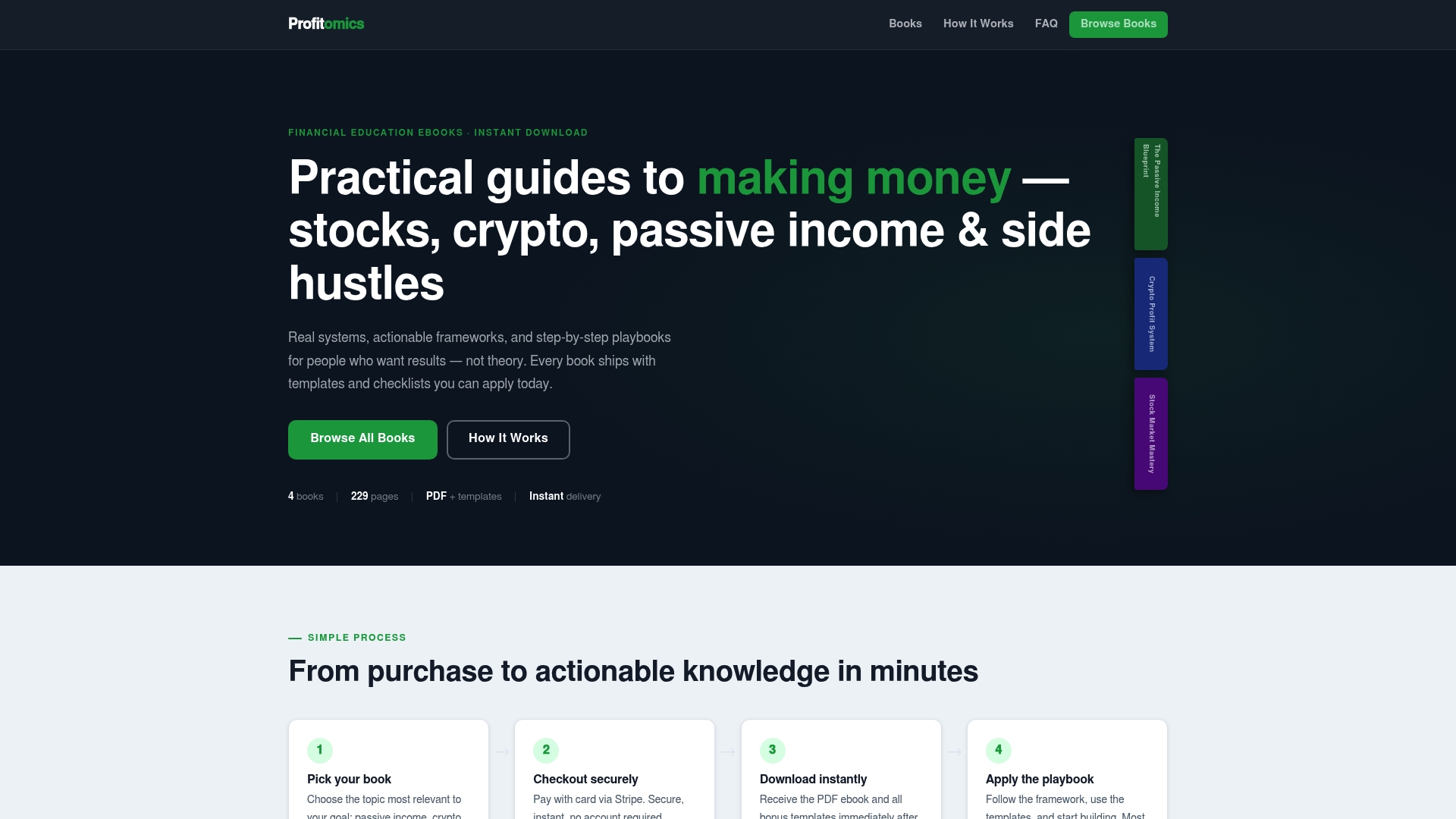
Browse the full range on the Profitomics homepage, including guides for stocks, crypto and car flipping. Our beginner passive income plan is a free place to start. Our guides do not replace an affiliate-specific course, but they give you the planning habits, checklists and structure that make any course easier to finish.
A simple plan for your first 30 days
Whatever you buy, a short plan keeps you moving.
- Days 1 to 3: complete a free beginner course and note your open questions.
- Days 4 to 7: pick a niche you genuinely know, using a repeatable research method.
- Days 8 to 14: join one or two reputable affiliate programs and read their terms, including how they handle disclosure.
- Days 15 to 25: publish your first helpful pieces, such as honest reviews, tutorials or comparisons, with clear disclosures next to every link.
- Days 26 to 30: review what you have tracked, then decide whether a paid course, with your gaps now named, is worth it.
This order means that if you do buy a course, you buy it knowing what to ask. You also arrive with a live project to apply the lessons to, and that is where most of the learning happens.
FAQ
What is the best affiliate marketing course for beginners?
Start with a free one, such as Ahrefs’ beginner course, which takes about 1 hour 49 minutes and needs no sign-up. If you then want a paid, guided program, the Pat Flynn course is listed at $499 for beginners. The Affiliate Lab is listed at $997 and suits learners focused on SEO.
Are paid affiliate marketing courses worth it?
They can be if you need structure, feedback and community, and if the instructor’s results are verifiable. They are not worth it if you cannot name what they add beyond free material. Check the syllabus, last update and refund terms before paying.
How much do affiliate marketing courses cost?
Free options exist, and paid programs in the sources above are listed from $329.99 for a first year of Solo Build It! up to $1,497 for Blog Growth Engine. Prices and promotions change, so confirm the current figure on the provider’s own page.
How long until I earn money from affiliate marketing?
Preply’s beginner guide says meaningful income takes 6 to 18 months to build. No course can promise a specific result, because your niche, consistency and audience all affect the outcome.
Do I have to disclose affiliate links?
Yes. The FTC says affiliates must clearly and conspicuously disclose their relationship to the retailer, ideally close to the link itself.
Sources
- Affiliate Marketing Course for Beginners (Ahrefs)
- Top 7 Affiliate Marketing Courses (DemandSage)
- How To Start Affiliate Marketing With No Money (Shopify)
- How to learn affiliate marketing online: A beginner’s guide (Preply)
- How to Evaluate a Digital Marketing Course Before You Enroll (Modern Marketing Institute)
- How to Validate Online Course Claims Before You Enroll (Phillip McCloud)
- FTC’s Endorsement Guides: What People Are Asking
- Guide to Affiliate Marketing for Beginners (Search Engine Land)